
Players evaluate gaming portals from the inside — how the games feel, whether withdrawals arrive on time, how the app behaves on their phone. Industry observers watch the same portals from the outside: what signals the market is sending, how competitors are responding, where the brand sits in community conversations relative to where it was a year ago.
These 2 perspectives tell different but complementary stories about a portal’s trajectory. The inside view reveals whether the product works. The outside view reveals what the product’s performance has done to the brand’s standing in the market. Both matter for understanding where a gaming portal actually is — and where it’s headed.
Hitclub is a reward gaming portal whose inside story is well-documented in player feedback: active card lobbies, reliable withdrawals, consistent mobile performance, transparent promotions. The outside story — how the brand registers from an industry vantage point — is worth examining separately. Portals like GO88 offer a useful reference frame: their brand growth followed a pattern of sustained market presence, growing community authority, and increasing share of spontaneous recommendations in player discussions. Hitclub has followed a recognizable version of that pattern, with its own timing and characteristics.
The Product the Brand Is Built Around
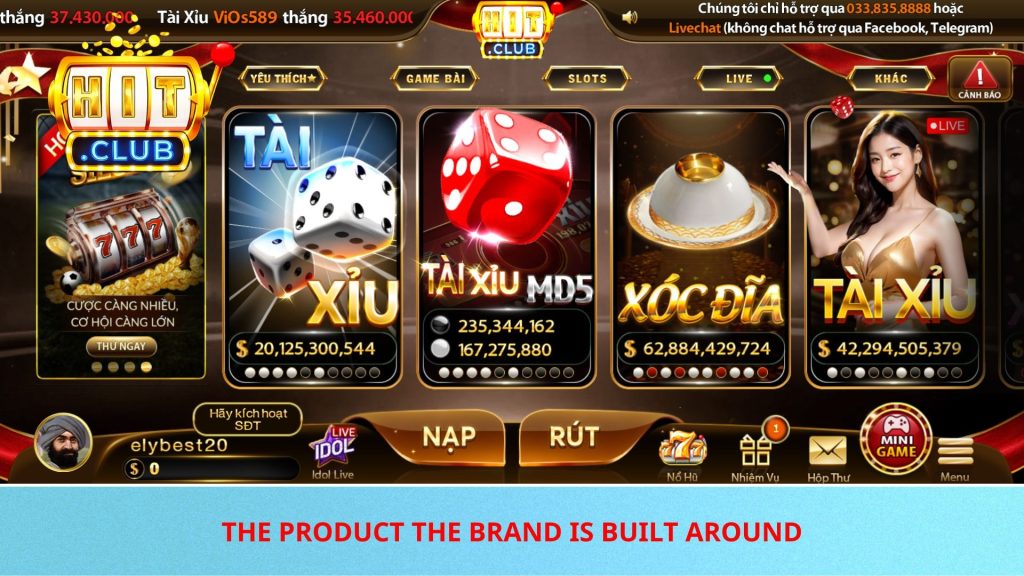
Hitclub operates as a multi-category game portal covering card games (Tiến Lên, Phỏm, Mậu Binh, Poker), progressive jackpot slots, live dealer tables with real-time human-hosted sessions, and arcade-style mini games. This catalog establishes the functional foundation — but from an industry perspective, what’s more interesting is what the catalog says about the portal’s strategic positioning and how that positioning has translated into brand signals over time.
Industry Signals Pointing to Brand Growth
Organic Search Volume and Community Mentions as Brand Indicators
From an industry perspective, 1 of the clearest signals of brand growth is the change in how often a portal’s name appears in contexts the portal didn’t create. Paid search volume reflects marketing spend. Organic mentions — in forums, in group chats, in community threads where users are helping each other navigate portal choices — reflect genuine brand penetration.
Hitclub’s presence in organic community discussions has grown noticeably over the past several years. The portal appears in recommendation threads where users are asking which portals to try, in comparison discussions where experienced players evaluate their options, and in explanatory contexts where users who already know the portal are helping newcomers understand what it offers.
This shift from absent-to-present in unprompted community discussion is 1 of the cleaner industry signals that a brand has crossed a threshold — it has moved from being something players might discover if they look for it to something they encounter because it’s already in the conversation.
Competitor Response as an Indirect Brand Signal
Brands grow in markets, and markets are competitive. When 1 portal develops features, pricing structures, or product qualities that attract users, other portals respond — not always publicly, but visibly to observers paying attention. Improvement cycles at competing portals often reflect, at least partially, the pressure created by portals that are performing well.
Without claiming specific insider knowledge of competitor strategy, the observable pattern in the Vietnamese online gaming portal market over the past 2 to 3 years has included greater emphasis on mobile performance standards, withdrawal transparency, and promotion clarity — areas where player-facing portals like Hitclub have established practices that made the market’s existing gaps more visible. This kind of indirect influence on competitor behavior is a marker of brand gravity — the portal has become a reference point in the competitive field rather than just a participant in it.
The Shape of Community Sentiment — Quantity and Quality
Brand growth isn’t just about how often a portal is mentioned — it’s about how. A portal mentioned 100 times in warning threads has different brand implications than 1 mentioned 100 times in recommendation threads. The shape of community sentiment matters as much as its volume.
Hitclub’s community sentiment, assessed across gaming forums and player discussion channels, shows a quality distribution that leans positive across the dimensions players care about most. Withdrawal reliability — the most consequential reputation factor — generates consistent positive mentions without patterns of serious complaint. Mobile performance generates positive comparative mentions from players who have experienced worse elsewhere. Promotion clarity generates specific positive feedback from players who have encountered misleading terms at other portals.
(Community sentiment overview: https://hitclub.cab/)
Negative mentions exist — support response times outside peak hours and live dealer streaming under high-traffic conditions are the most consistent friction points — but they are proportion-appropriate to a portal of Hitclub’s size and don’t represent the category of complaint (financial reliability, fundamental trust) that generates lasting brand damage.
How Hitclub’s Brand Positioning Reads from the Outside
Occupying a Specific Brand Space
From an industry perspective, Hitclub occupies a recognizable brand space: mid-market quality leader. Not positioned as a budget option where players trade experience quality for lower commitment, and not positioned as a premium portal where marketing claims exceed product delivery. The Hitclub brand communicates reliable, consistent, well-executed — a portal that delivers what it says it will without extravagant promises.
This positioning is more durable than alternatives at either extreme. Budget positioning creates a ceiling on player quality and lifetime value. Premium positioning creates expectation gaps that damage trust. The middle — where Hitclub operates — attracts players who have outgrown tolerance for poor quality but haven’t been convinced that extravagant marketing claims reflect reality.
Brand Growth Without Acquisition-Dependency
One of the more distinctive features of Hitclub’s brand growth from an industry perspective is how limited the dependence on acquisition marketing appears to be. Portals that grow primarily through advertising spend show specific patterns: rapid user count spikes around campaign periods, followed by churn that returns the active user base toward pre-campaign levels.
Hitclub’s growth pattern looks different — more gradual, more persistent, less tied to campaign cycles. This pattern is consistent with brand growth driven by retention and referral rather than acquisition campaigns: users who stay because the product works, and who bring in new users because their personal experience makes recommendation feel natural.
From an industry standpoint, this growth pattern is more valuable than acquisition-driven alternatives because it compounds rather than cycling. Each retained user is a potential advocate. Each successful referral adds a user who arrives with a social connection to the portal rather than cold curiosity.
Risks to Continued Brand Growth
An honest industry perspective acknowledges the risks to continued brand growth alongside the signals of its presence.
Scale risk is real for any gaming portal in a growth phase. The performance qualities that have built the Hitclub brand — reliable withdrawals, active card lobbies, consistent mobile performance — are easier to maintain at current scale than at 2 or 3 times the current user base. Infrastructure investment has to stay ahead of user growth rather than following it.
Competitive risk is ongoing. The Vietnamese online gaming portal market continues to attract new entrants, some of whom will invest in the same quality dimensions that have driven Hitclub’s brand growth. Maintaining a quality-leader position requires continued investment rather than defending an established position.
Expectation risk is perhaps the subtlest. As the Hitclub brand grows, so does the baseline player expectation. Users who choose the portal because of its reputation for withdrawal reliability and mobile performance bring expectations calibrated by that reputation. Any sustained deterioration in these dimensions would generate sentiment damage disproportionate to the problem’s technical severity — because players who chose specifically because of quality assurances feel more betrayed when those assurances slip.
Conclusion
From an industry perspective, Hitclub’s brand growth reflects a portal that has built market presence the durable way: through product performance that generates community endorsement, a retention-and-referral growth pattern that compounds without depending on acquisition cycles, and a brand positioning in the mid-market quality leader space that is more sustainable than either budget or extravagant-claim alternatives. The risks to continued growth are real and identifiable — scale, competition, rising expectations — but they’re the risks of a portal growing from a position of genuine quality rather than one defending a perception gap. That distinction matters for how the brand story develops from here.